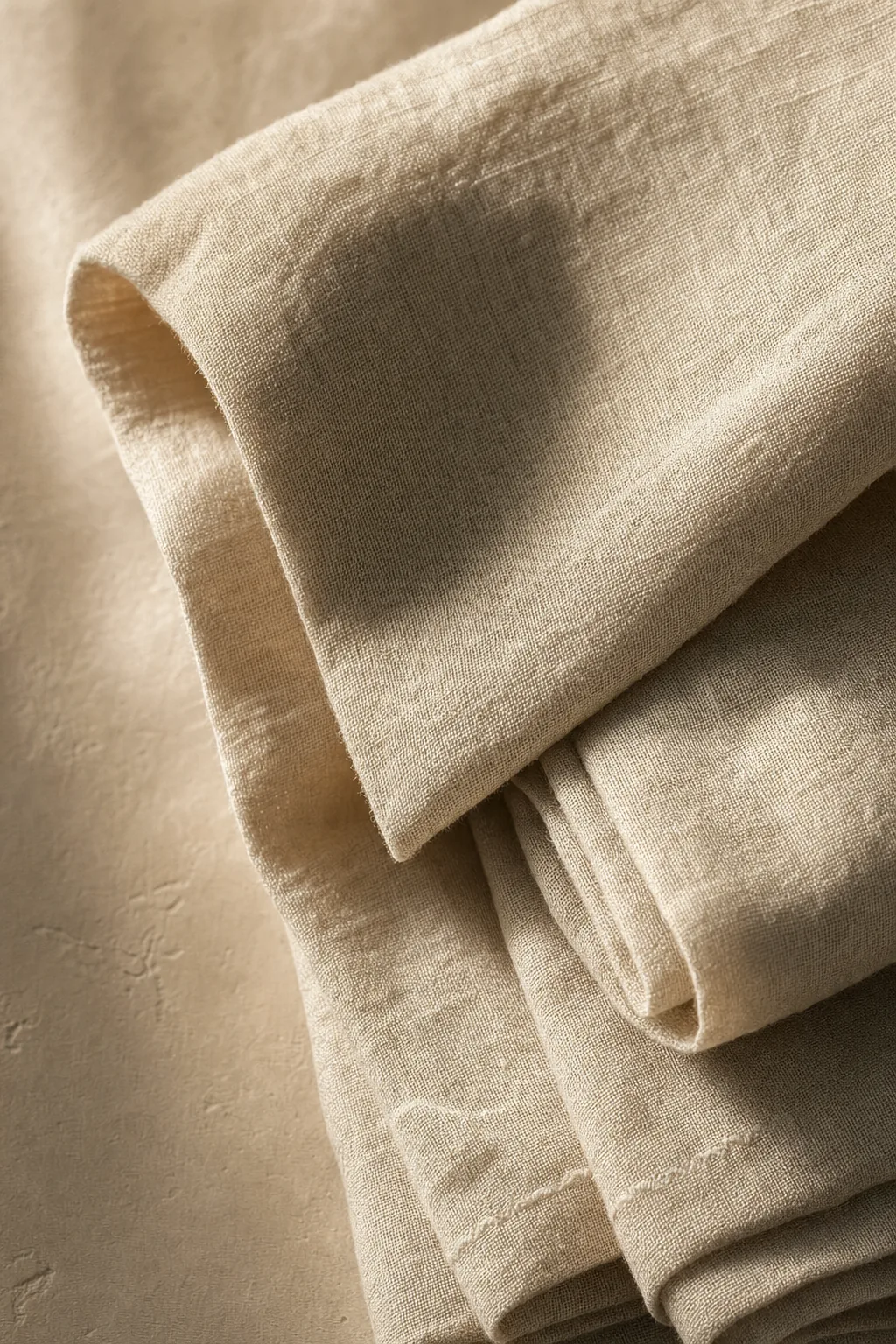
Every CHIC piece begins in a field in Normandy. It ends in a small atelier in Porto. Between them, five hands and a thousand kilometres of care.
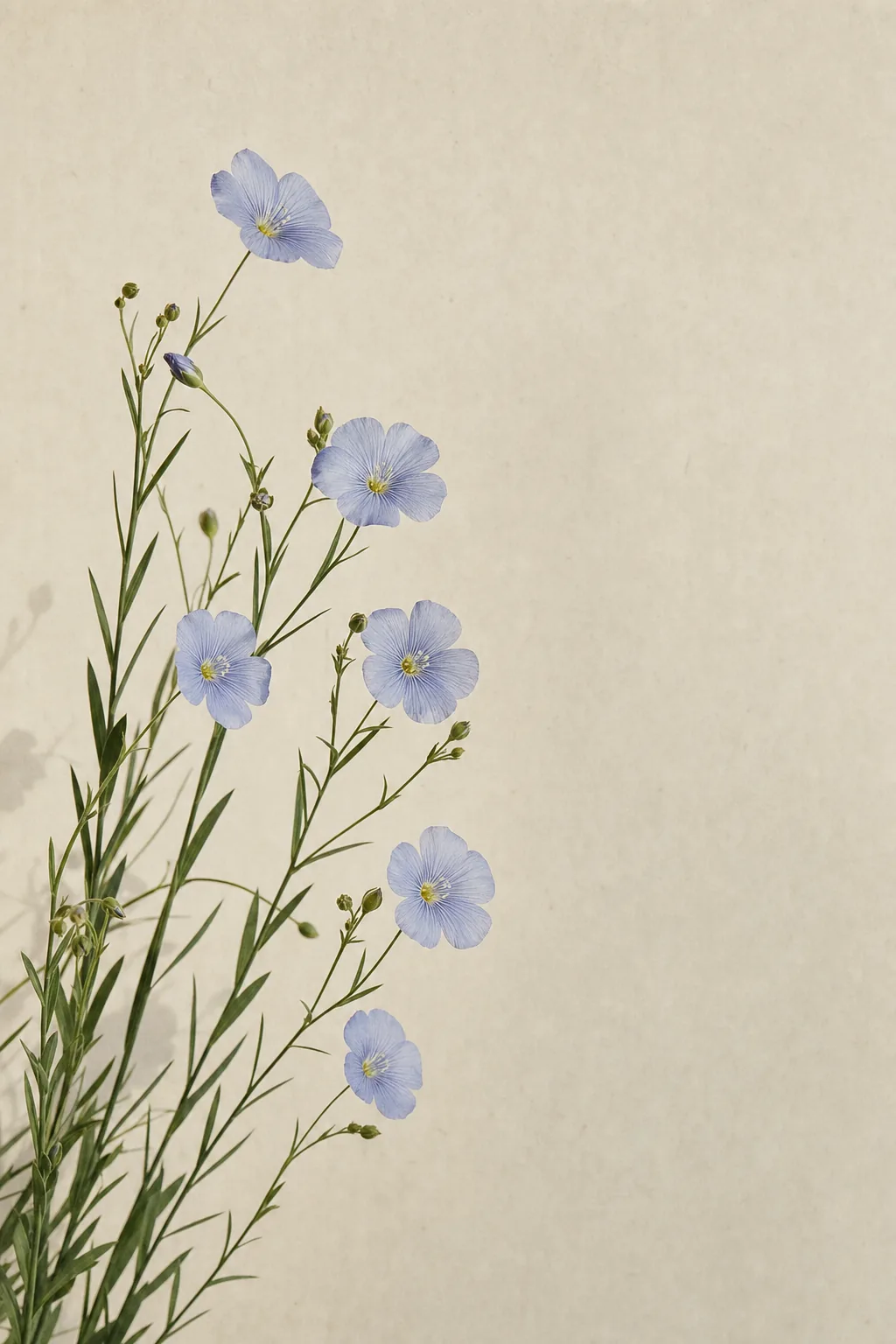
Our flax is grown in the Pays de Caux, a chalky plateau north of Rouen where the Atlantic softens the summer and the soil is rich in the calcium linen loves. It is Masters of Linen™-certified — the strictest fibre standard in Europe — and rain-fed, which is to say, unwatered. Flax is one of the only cash crops on the planet that asks for no irrigation, no pesticides, and no defoliants.
We work with three farming families whose fields we visit twice a year. Sowing is in March; retting — the field-dew process that separates fibre from stem — is in August. The plant is pulled from the ground rather than cut, so the entire fibre length is preserved. Length is the difference between linen that softens and linen that pills.
From Normandy, the retted flax travels 380km north-east to a family-run mill in West Flanders, Belgium, where it has been spun into yarn since 1897. Belgian mills are the best in the world at long-fibre linen for a reason: the water is soft, the humidity is stable, and four generations of weavers know what a good pick feels like at 2am.
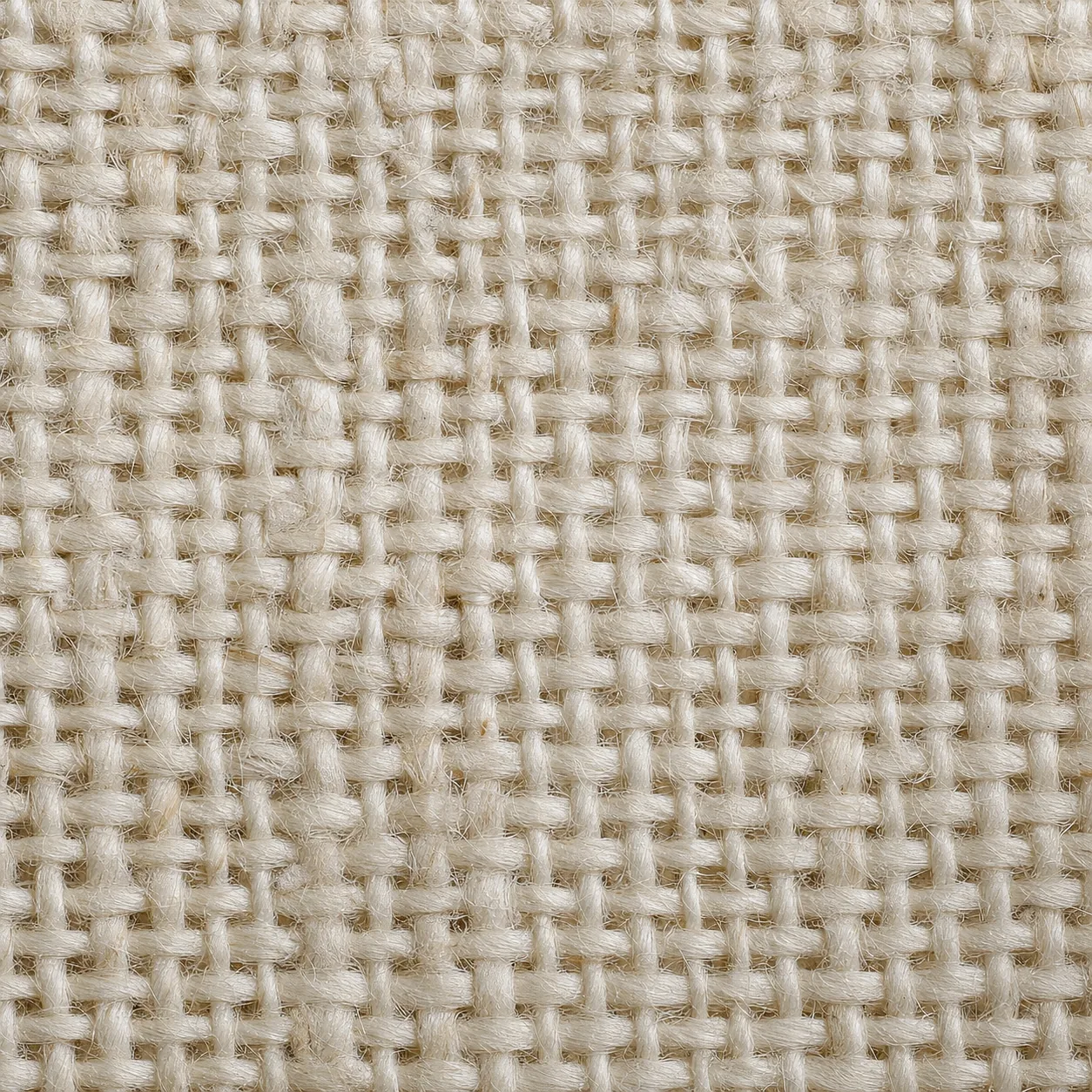
Our cloth is woven on air-jet looms at 42 picks-per-centimetre — dense enough to hold its shape, open enough to breathe. GSM ranges from 165 for the crisp tailored shirt to 220 for the drawstring trouser. We refuse anything below 160 GSM — cheap linen wears out at the elbows.
Our four core colours — Ivory, Coffee, Navy, and White — are dyed in Portugal using a low-water reactive process that fixes colour to the fibre rather than coating it. The result is a linen that keeps its colour for years without fading, and a wash water clean enough to release safely (in fact, our mill filters and re-uses 82% of it).
Ivory is not bleached — it is the natural undyed colour of Belgian flax, and it varies by harvest. Coffee is a slow-oxidised brown that deepens in first sun exposure and then holds. Navy is dyed twice for depth. White is optically brightened only to the minimum — you will see the fibre, and it will be honest.
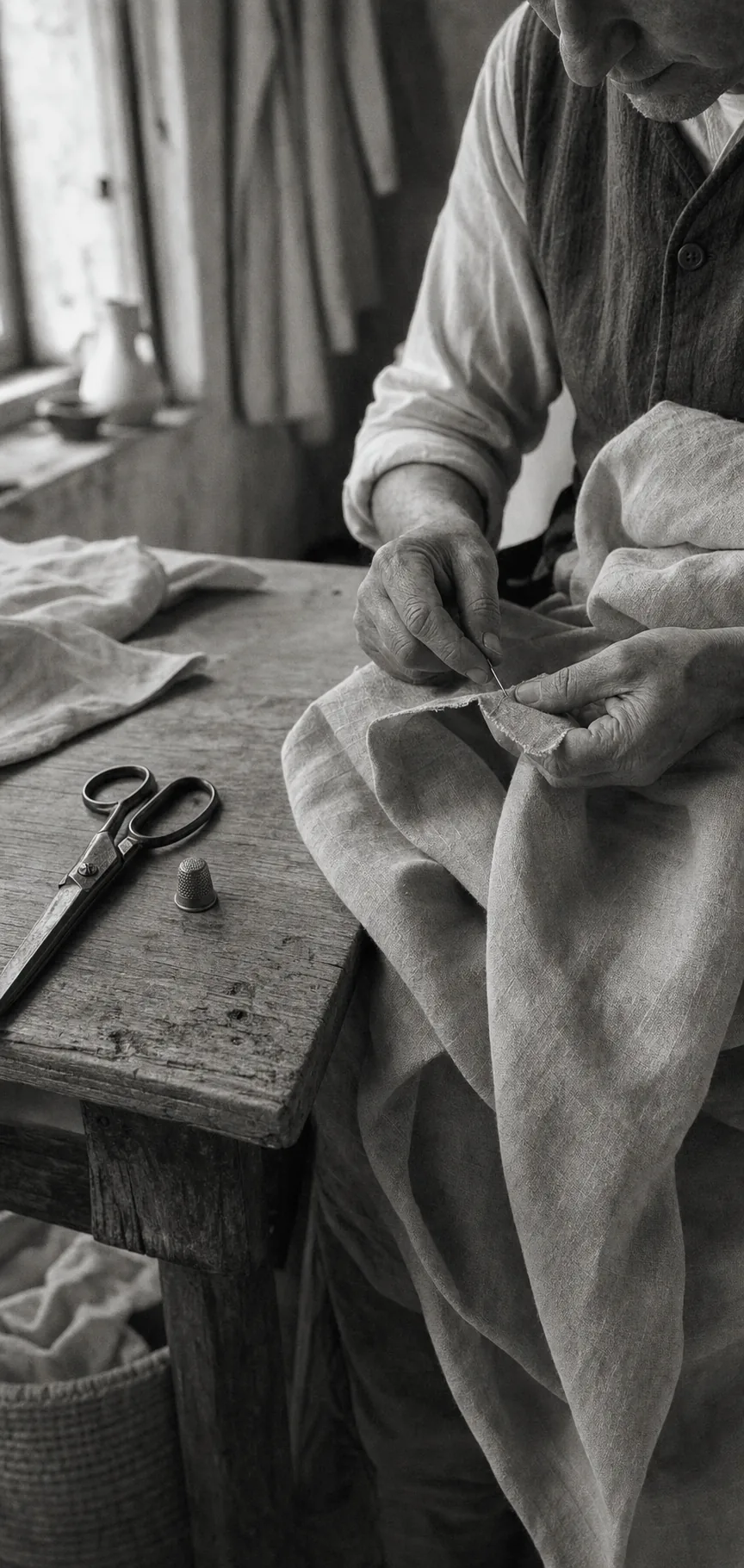
Every CHIC piece is cut, sewn, and finished in our atelier in Porto, Portugal — twelve makers, one long table, an average tenure of eleven years. We chose Porto because the maritime climate is kind to linen, because the tradition of cut-and-sew is deep and dignified, and because we can visit the floor every month.
Construction details we insist on: French seams at every join (no raw edges inside the garment), single-needle topstitching at 8 stitches-per-inch (twice the industry average), corozo or natural horn buttons (never plastic), and a silk-thread woven label — because a scratchy label is a small daily insult.
Every piece is inspected against a paper light before it is folded. Any pull, any snag, any thread out of line — it goes back to the maker.
Then, before you ever see it: three washes. Cold, soft water; a mild pH-neutral soap; a slow tumble. This is the difference between linen that arrives stiff and asks you to break it in, and linen that arrives already broken in, on its way to becoming soft-as-old-cotton over the next twelve months.
Every piece is finished by hand, folded in a natural linen dust bag, and boxed with a small square of the parent cloth — so you can test detergents on the swatch before the garment. Nothing to throw away, nothing wasted.
Norman flax field → Flemish spinning mill → Portuguese dye house → Porto atelier → your door. Five hands, 1,400 kilometres, six months from seed to shipment. A piece worth keeping.